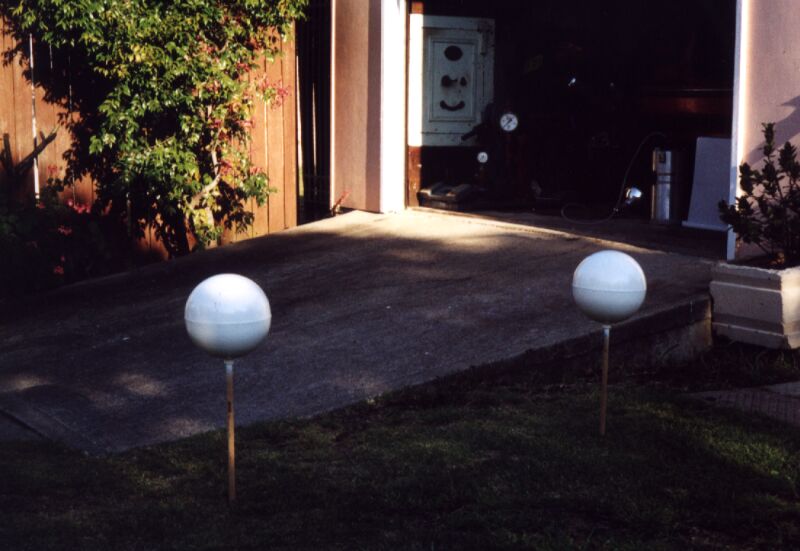
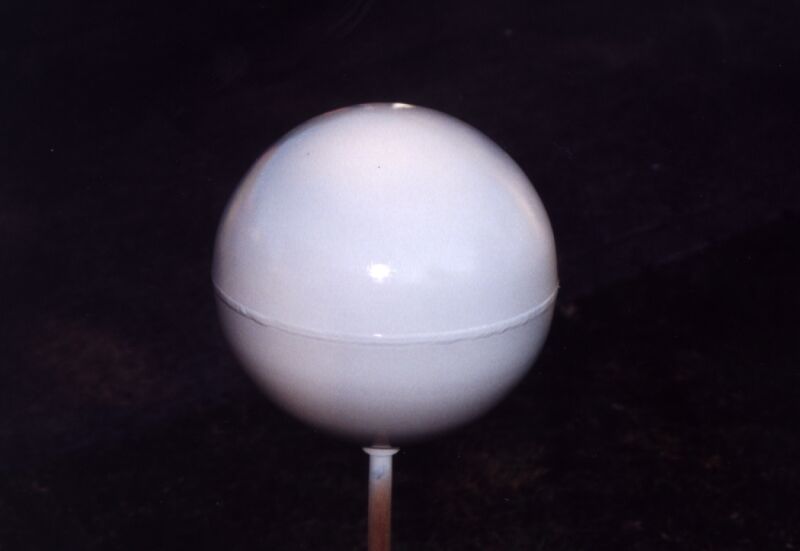
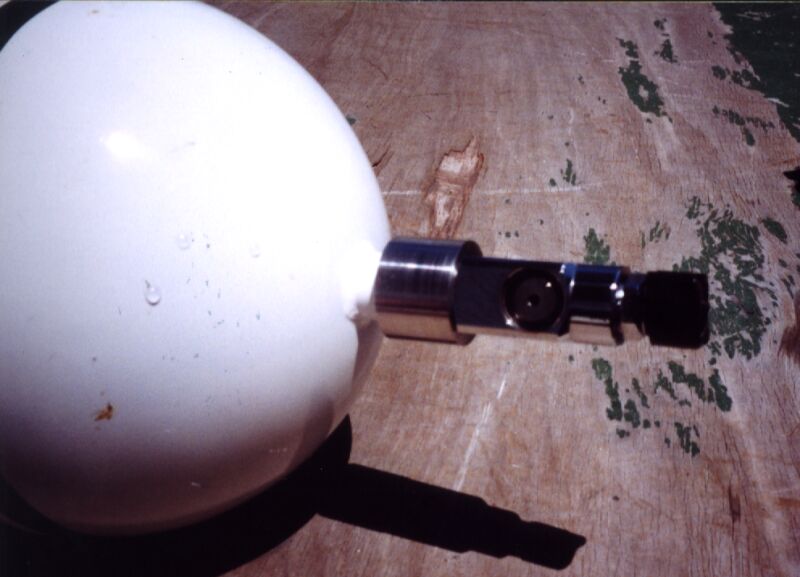
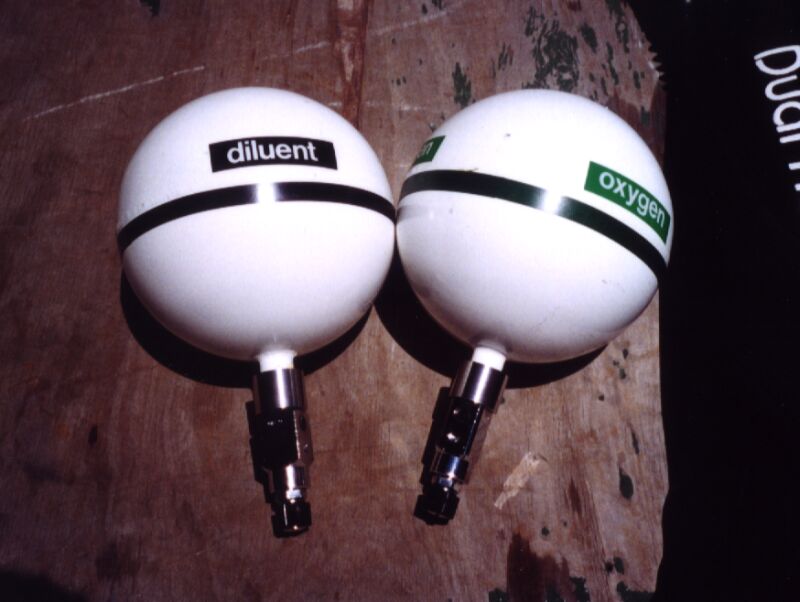
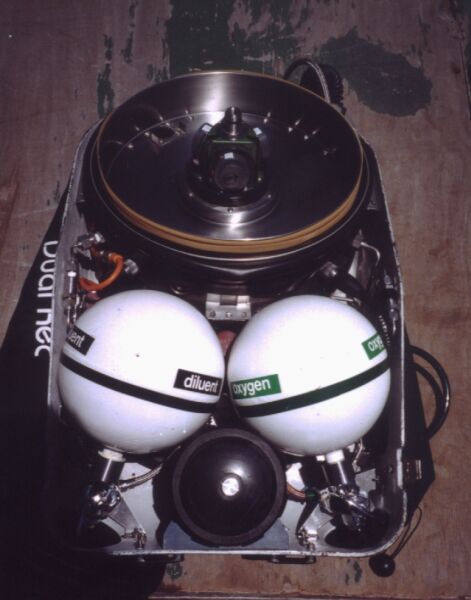
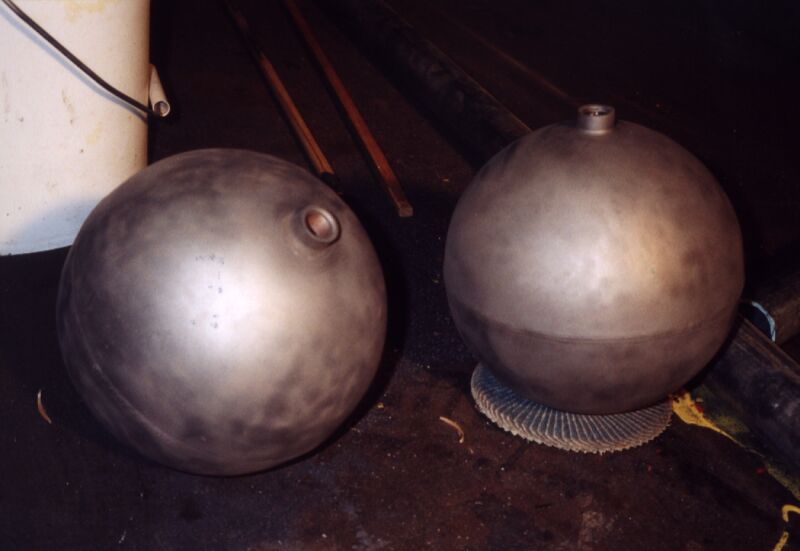
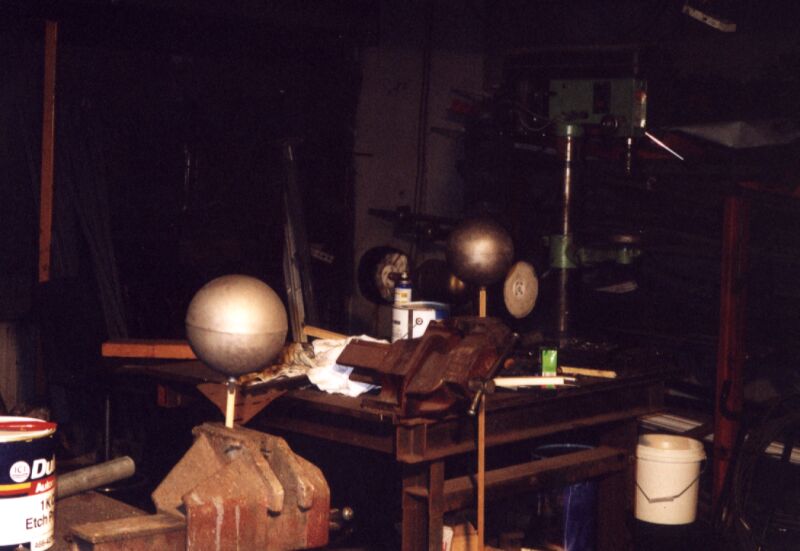
Spheres for the Mk15 series rebreathers are fairly rare, and it is likely in the future that owners will need to refurbish their existing spheres, or refurbish surplus ones if they ever come onto the market. This is especially true of the steel spheres, which unlike the Inconel ones, tend to deteriorate with age. I recently aquired a pair of spheres for my Mk15, but they were in poor condition, so a refurbishment was in order. Here's how it went. Click on pictures for a larger version. Here are the spheres as I recieved them. They went through the hands of at least three familiar names in US rebreather circles, but I suspect these guys passed them off as being 'old crap', but with a bit of attention they should be good for years of service. Those familiar with spheres will realise that these aren't the usual steel spheres as their valve neck is different. I'm not sure if they were originally for missile or spacecfraft use, as spherical tanks were used a lot in that field. These ones are different from the CCR1000 and Mk15 spheres in several ways. The first difference is the size. Mk15 steels are 21 cubic feet, whereas these are slightly smaller in diameter, and come in at 17 cubic feet. This equates to a reduction in dive time from 400 mins to 320 mins. The second difference is the neck. These ones don't have the flange that the later ones have, and the thread of the neck is also smaller at 9/16 - 18 tpi. When I recieved them, they had green paint over the outside, so the first step was to get this off and inspect underneath. The paint peeled off easily and only took a short while. This left the spheres in their original coatings, which is possibly teflon, one white as is commonly seen in steels, and one black. There are images of spheres the same as this in the Apollo EVA backpack breathing system. After removing the coating, the spheres were taken to the workshop and grit blasted to bring them back to bare metal. The spheres were then thoroughly cleaned with Prepsol, a solvent which removes every trace of oil and grease. Next they were coated with etch primer, which bites hard into the metal giving a good surface for the paint to stick to. Here the spheres are on dowels stuck into my lawn, and have been given their first coat of paint. The paint I used is an Epoxy Enamel Appliance Paint which is available from the local hardware shop. It gives a nice tough finish, and looks good too! As I said above, these spheres are smaller than usual, and also have a smaller neck thread. This caused a problem when we went to fit standard Mk15 tank valves. One solution would have been to machine the thread on the valve down to the new size, but this would have meant that the distance between the outlet and the sphere body would have been too short. This wouldn't be a problem on a rig with removable regulators, but my Mk15 has Mk15.5 style fixed regs. The cure was to machine up a fitting which both adapted the thread, and offset the distance to the body. These were made from stainless steel. To finish off the restoration, the spheres were certificated, then Oxygen and Diluent stickers as well as black and green bands applied. And here they are fitted into my recently rebuilt Mk15. Needless to say, I'm very happy with the result! Post Script: This paint was a bad choice as it wasn't flexible enough, and cracked after about six months as the spheres expanded and contracted due to heat produced during filling.
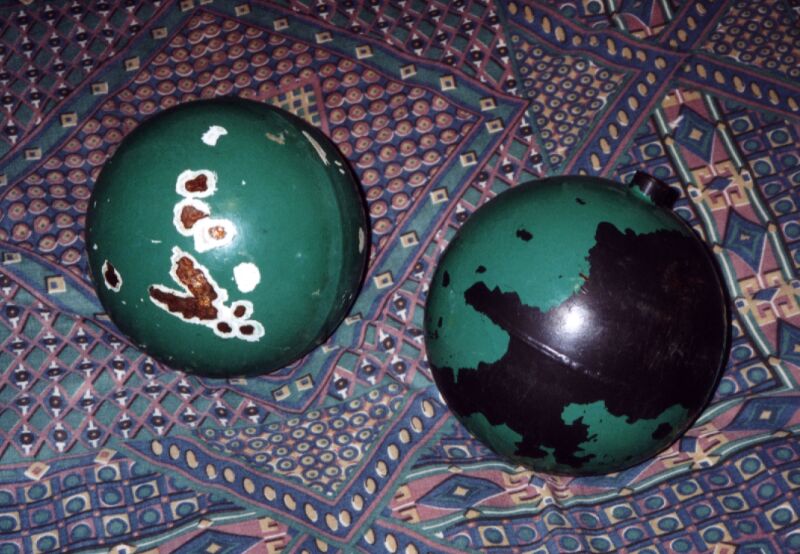
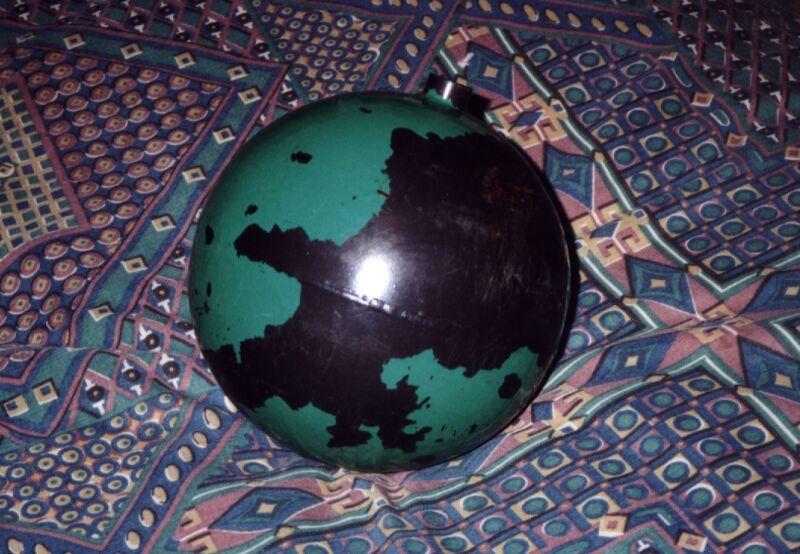
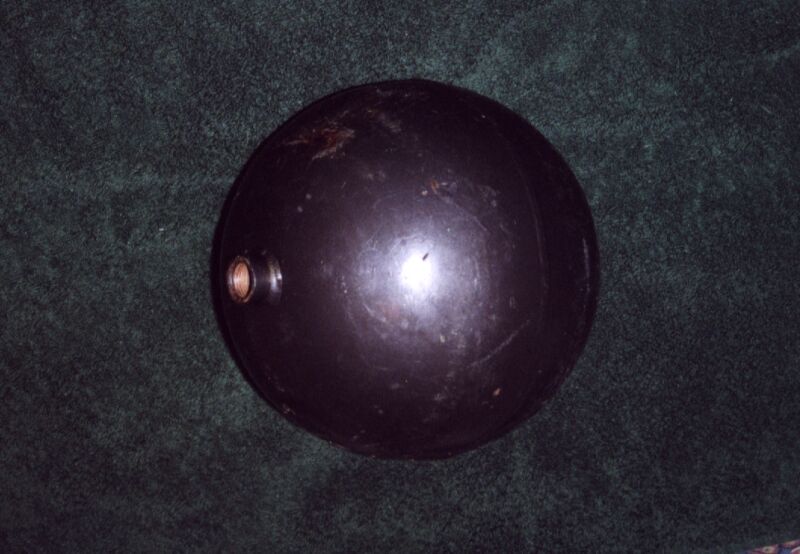
The black one looked in good condition, but the white one had several areas where the coating had been worn off and the surface had begun to rust. Just to be sure, I decided to strip the coating off both spheres so they could be thoroughly checked. This took half an hour to do on the white one, but the black one was much more work, taking over six hours to peel. There was surface corrosion on both, underneath the coating, and the black one had some pitting, but nothing too serious. As water was able to get under the coating, it wouldn't have taken long for these spheres to be rendered useless. Guys, if you have any holes or lifting of the coating, it might be best to strip them.
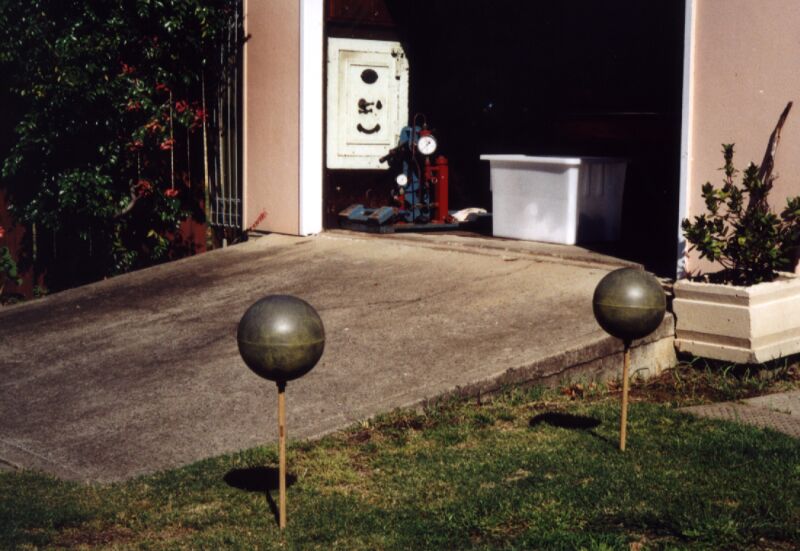
The eagle eyed amongst you probably noticed the Siebe Gorman manual booster pump in the background, currently under restoration.